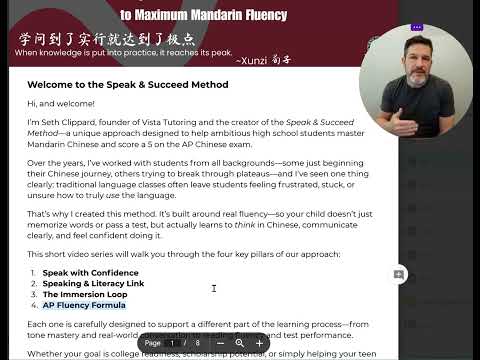
Watch the Method
Most Mandarin programs teach the language the way native speakers acquired it — from birth, through immersion, over decades. That's the wrong model for an English-speaking student. The Speak and Succeed Method is built on second-language acquisition science, and it produces results the traditional approach never will.
The Four Steps
The Philosophy Behind It
The single biggest mistake students make when learning Mandarin is waiting until they feel "ready" to speak. They memorize vocabulary. They study grammar. They practice tones in their head. And then, when someone actually speaks to them, they freeze — because they've never trained the part of language learning that matters most: real-time output under pressure.
The Speak and Succeed Method flips this. Speaking starts in session one. Confidence is built before the vocabulary is perfect. The brain learns to produce language, not just recognize it. And a custom immersion plan keeps the language alive between every session — because the research is clear: fluency is built through daily contact, not weekly lessons alone.
"I've studied five languages. The method that works is always the same: get speaking early, make the language part of your daily life, and build the reading and speaking together. Everything else is a shortcut that isn't."
— Seth Clippard, PhDThe Four Steps
The foundation most programs skip
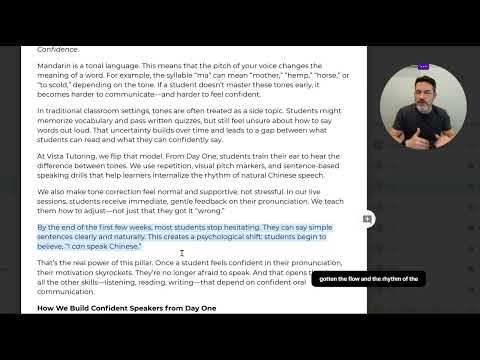
Mandarin is a tonal language — the same syllable means completely different things depending on the tone used. Most programs treat this as an afterthought, moving quickly to vocabulary and grammar. The result: students who know words but sound wrong, and know it, and stop trying to speak.
The Speak and Succeed Method starts here. Before vocabulary lists and grammar rules, Seth works on tones and pronunciation until they become automatic. When a student can produce sounds correctly and confidently, they stop hesitating before they speak. The freeze begins to break at this stage.
Think in Mandarin — not through English
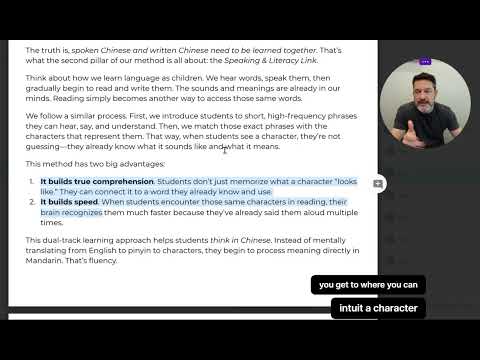
A student who learns to speak before they can read, or read before they can speak, builds a fractured relationship with the language. They translate in their head. They pause. They search for words. Real fluency requires the two to work together — so the brain builds a single, unified Mandarin system rather than a translation layer between English and Chinese.
In this step, reading and speaking are developed in parallel. Characters aren't memorized in isolation — they're learned in the context of sentences your student is already speaking. The result is a student who processes Mandarin directly, without going through English first.
Fluency is built between sessions, not just during them
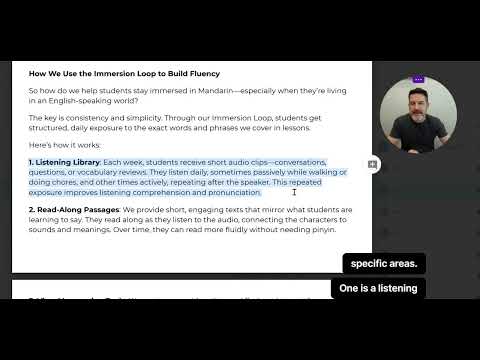
One hour of tutoring per week is not enough to build a language. The research on second-language acquisition is clear: fluency requires daily contact with the target language. The question isn't whether immersion matters — it's how to make it practical for a busy American high schooler.
Seth builds a custom immersion plan for each student — specific podcasts, shows, apps, reading materials, and conversation opportunities that fit their life and their level. The goal is to make Mandarin a daily presence, not a once-a-week event. Students who follow their immersion plan consistently progress dramatically faster than those who don't.
Real fluency meets exam-specific training
Steps 1–3 build genuine Mandarin fluency. Step 4 takes that fluency and focuses it on the specific demands of the AP Chinese exam — timed speaking tasks, simulated conversations, written responses, and listening comprehension under pressure. The distinction matters: students who train only for the exam often crack under pressure, because their fluency is shallow. Students who build real fluency first and then apply it to exam format perform with confidence.
The AP Fluency Formula begins once the foundational fluency work is solid. Seth introduces full AP exam simulations, drilling each section type under realistic conditions until the format becomes completely familiar and the language flows naturally within it.
The Key Differentiator
Most Chinese tutors are native speakers. They're fluent, knowledgeable, and well-intentioned. But they learned Mandarin from birth — through a process that has almost nothing in common with how an English-speaking teenager acquires a second language. They teach what they know, which is the native-speaker path. That path doesn't work for your student.
Seth's ESL training and his own experience learning Mandarin as an adult give him a completely different toolkit. He knows what it feels like to start from zero, to struggle with tones, to freeze mid-sentence. And he knows the research on how second languages are actually acquired — which shapes everything about how he teaches.
Choose Your Track
Any motivated student ready to do the work and build real conversational fluency. No exam required. Just the language, learned the right way.
Steps used
Real fluency built first. AP-specific training layered on top. Students walk into the exam with genuine command of the language — not just memorized patterns.
Steps used
Watch the Method

The Method & The Man Behind It
Seth Clippard, PhD developed the Speak and Succeed Method from his own language learning journey — French, Thai, Sanskrit, Japanese, German, and Mandarin — combined with his academic training in linguistics, second-language acquisition, and cross-cultural communication.
He's taught at university level in both the US and Taiwan, directed a language center, and translated books from Chinese to English. He knows what works because he's lived it — as a learner, a teacher, and a researcher.
Ready to Put the Method to Work?
Book a free 30-minute call with Seth. You'll talk about where your student is, which track fits best, and what a realistic path to fluency looks like.